
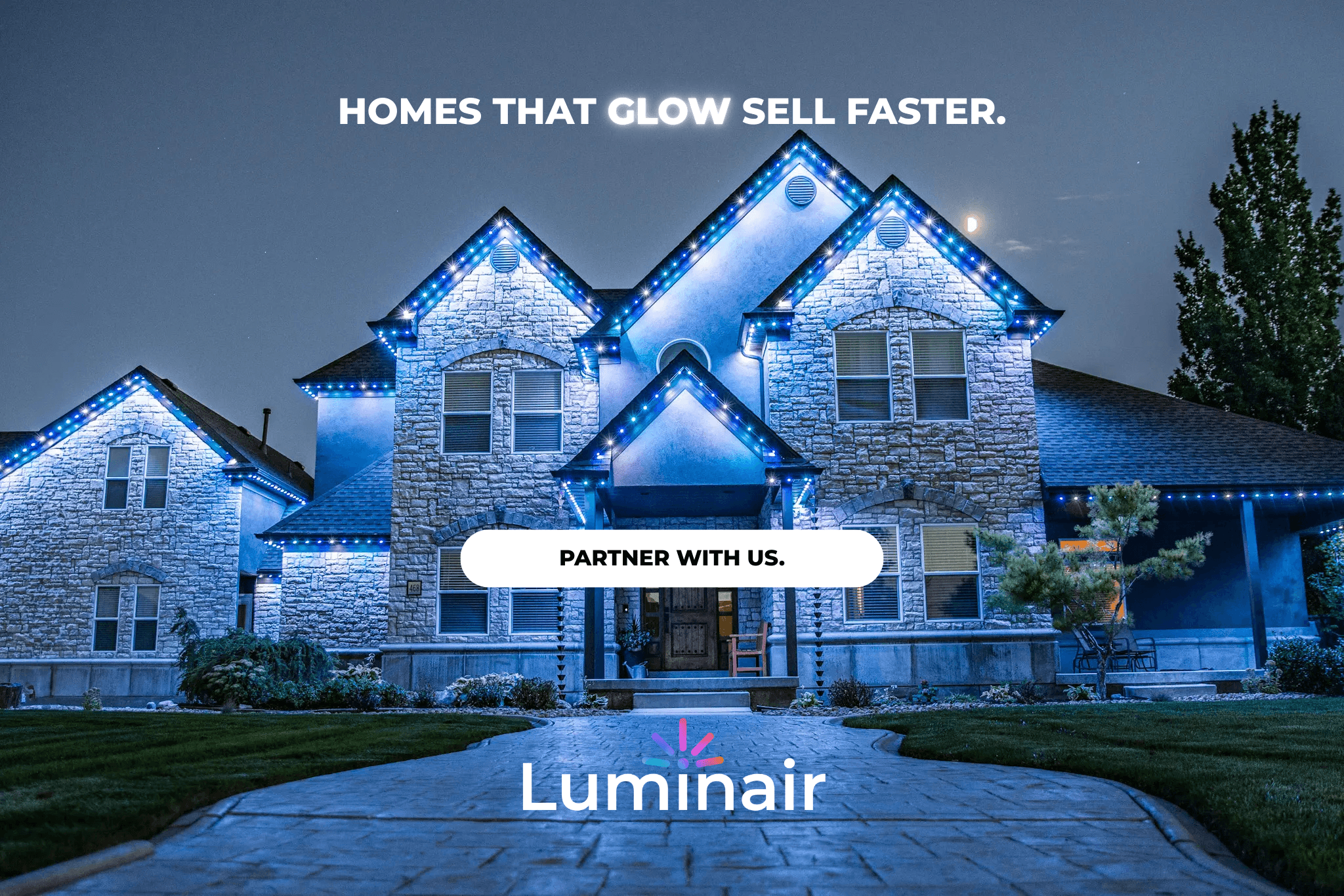
Every homeowner has heard the promise: upgrade your lighting and watch your home's value climb. But when it comes to permanent LED installations — those architectural roofline, soffit, and eave-mounted systems built to last — is the return on investment real? Or is it clever marketing? We dug into the data, surveyed real estate professionals, and examined real-world case studies to give you a straight answer.
The Landscape
Why Lighting Has Become a Key Value Driver
For most of real estate history, lighting was an afterthought — functional, forgettable, easily swapped out by a new owner. But something shifted as architectural LED technology matured. Permanent LED systems, mounted flush to rooflines and soffits with full-color programmable capability, stopped being a novelty and started showing up in listing descriptions alongside quartz countertops and hardwood floors.
The reason is partly psychological. A well-lit home communicates one thing above all else to a prospective buyer: this property is cared for. Real estate agents consistently report that lighting is one of the first things buyers notice — and one of the last things they forget. When that impression is made by a permanent, professionally installed system rather than a plastic string of seasonal bulbs, the signal is even stronger.
There's also a generational shift happening in what buyers value. Younger homeowners are increasingly drawn to homes that offer smart, customizable features out of the box — and a programmable permanent LED system fits squarely into that appetite.
- 101.5% Average sale-to-list price ratio for homes featuring upgraded LED lighting, per Redfin data
- 20% Potential increase in perceived home value cited by real estate professionals
- 50% ROI on professionally installed outdoor lighting systems, per the National Association of Realtors
Case Studies
Four Homes. Four Different Stories.
Numbers can tell part of the story, but nothing illustrates the real-world impact of permanent LED lighting quite like specific homes and the outcomes their owners experienced. The following four case studies are drawn from homeowners, investors, and real estate professionals who have seen the effect firsthand.
Case Study 01: The Suburban Flip: Phoenix, Arizona
A real estate investor purchased a 2,400 sq ft ranch-style home in a Phoenix suburb with the intention of flipping it within six months. The property was competitive — a quiet street of similar homes, all roughly the same square footage and vintage. To differentiate the listing, the investor chose to install a permanent LED roofline system with warm-white and color-changeable modes across the full front elevation, garage, and backyard patio pergola.
The installation cost was approximately $4,200 including professional labor. When the home was listed, it stood out dramatically in evening listing photos — a factor the listing agent credited with generating 40% more showings than comparable homes on the same street. The property sold in 11 days at $9,500 above the asking price, in a market where the average days-on-market for comparable homes was 34 days.
Result: $4,200 investment · Sold $9,500 over asking · 226% return on the lighting investment alone · Sold 3x faster than comparables.
Case Study 02: The Long-Term Owner: Nashville, Tennessee
A Nashville couple installed permanent LED soffit lighting on their 1,900 sq ft craftsman home with no intention of selling — at least not immediately. Their primary motivation was aesthetics: they wanted to enjoy their home's curb presence year-round without the annual ritual of stapling temporary lights to gutters. The system cost $3,800 installed.
Three years later, when they did decide to list, their real estate agent flagged the lighting as a meaningful differentiator in a competitive spring market. Comparable homes on their street had sold for between $415,000 and $432,000. Their home sold for $447,000 — roughly $15,000 to $32,000 above the comparable range. Their agent attributed roughly half of that premium to the combination of the lighting system and the general signal of quality maintenance it conveyed.
Result: $3,800 investment · Estimated $7,500–$16,000 in added value at sale · Years of enjoyment between installation and listing — the "Return on Enjoyment" factor.
Case Study 03: The Rental Portfolio: Denver, Colorado
A mid-size residential landlord managing 12 single-family rentals in the Denver metro area decided to install permanent LED systems on four properties as a trial — primarily to reduce tenant maintenance requests related to seasonal light installation and to improve exterior appearance for lease renewals.
The results over an 18-month period were measurable on several fronts. The four upgraded properties saw zero lighting-related maintenance requests compared to two or three per season on non-upgraded units. More significantly, lease renewal rates on the upgraded properties were 25% higher than the baseline across the portfolio. When two of the upgraded properties were later listed for sale, they attracted offers 8–12% above the appraised value — a spread the appraiser attributed in part to the "turnkey, premium exterior finish."
Result: Higher tenant retention · Zero maintenance requests · 8–12% above-appraisal sale prices · LED systems paid back within 14 months through maintenance savings alone.
Case Study 04: The High-End New Build: Scottsdale, Arizona
A custom home builder developing a 4,100 sq ft luxury spec home in a Scottsdale golf community incorporated a full permanent LED system into the build budget from day one — roofline, landscape uplighting, pool perimeter, and driveway edge lighting. Total LED lighting budget: $11,500.
The builder's rationale was simple: luxury buyers in this price range ($1.8M–$2.2M) expect a home to be fully realized, not a starting point for future upgrades.
The home received four offers within the first two weeks on market — a highly unusual outcome for a spec build in that price bracket. The final sale price of $2.19M exceeded the builder's target by $90,000. While multiple factors contributed, the listing agent noted that every prospective buyer specifically commented on the exterior lighting during showings, and two buyers cited it as a deciding factor when choosing this home over a comparable listing nearby.
Result: $11,500 lighting investment · $90,000 above target sale price · Multiple buyers cited lighting as a decisive factor · Fastest close in the community that quarter.
The Mechanics
Why Permanent LED Lights Move the Needle
The property value effect of permanent LED lighting isn't magic — it operates through several well-documented channels that real estate professionals, appraisers, and behavioral economists have studied independently.
1. Curb Appeal Is Disproportionately Powerful
Buyers form lasting impressions within seconds of arriving at a property. This is well-established in real estate psychology. An illuminated home at dusk doesn't just look beautiful — it activates a deeply ingrained human response to warmth, security, and belonging. Architectural lighting transforms a house from a structure into a presence. That emotional response is not easy to quantify, but its effect on offer prices is real and consistent across markets.
Research from Zillow has shown that homes with strong curb appeal and high-quality exterior lighting tend to sell faster and for higher amounts than interior-equivalent properties without it. A great kitchen hidden behind a dull, dark exterior loses its competitive edge before buyers even walk through the door.
2. Permanence Is a Feature, Not Just a Detail
There's a critical distinction between a $40 string of lights draped over gutters and a professionally installed permanent LED system. The former signals temporariness. The latter signals investment — it tells a buyer that the previous owner cared enough to do this right.
Permanently mounted systems with clean channel mounting, weatherproof connectors, and professional-grade controllers read as a finished home rather than a decorated one.
Buyers also do the math: they won't need to buy and install lighting themselves. That convenience has real monetary value, and buyers will often price it in — sometimes more generously than the actual installation cost.
3. Energy Efficiency Resonates With Modern Buyers
Modern LED systems use roughly 80% less energy than equivalent traditional lighting. For buyers — particularly younger buyers in the 25–40 demographic — energy efficiency isn't just a financial consideration, it's a value alignment signal. Homes with documented LED upgrades increasingly score better in perceived sustainability, which influences not just offers but also mortgage products and insurance rates in some markets.
The long operational lifespan of quality LED systems — often 50,000 hours or more — also means buyers aren't inheriting a maintenance burden. That low-upkeep promise is consistently cited by real estate professionals as a selling point in the 35–55 buyer demographic.
4. Photography and Digital Listings Have Changed the Game
Over half of all home searches now begin online, and listing photography has become an arms race. Twilight photography — exterior shots taken at dusk with lights on — consistently outperforms standard daytime exterior shots in click-through rates and showing requests. Permanent LED systems give photographers a canvas to work with that temporary lights simply cannot match: cleaner lines, consistent color temperature, and an architectural quality that reads beautifully on screens.
"When a home is well lit, buyers see it as a fresh canvas. They're able to imagine all the possibilities — and that imagination is where offers are born." — RE/MAX Real Estate Report, 2023
Honest Assessment
Where the Value Is Real — And Where It Isn't
No upgrade adds value in a vacuum. Permanent LED lighting is a genuinely strong investment in the right context, but it isn't a universal guarantee. Here's an honest look at both sides.
Where Value Is Strongest
- Mid-to-upper-range residential homes where buyers expect premium finishes
- Markets where comparable listings are competing on similar square footage and layout
- Properties with strong architectural features that lighting can accentuate
- Rental portfolios where reduced maintenance + tenant satisfaction drive ROI
- Homes in sun-belt markets where outdoor living and evening ambiance are a lifestyle expectation
- New builds where the lighting system can be featured as a standard inclusion
- Homes planning to sell within 1–5 years, maximizing both enjoyment and sale premium
Where Value May Be Limited
- Entry-level price brackets where buyers are focused on fundamentals, not features
- Markets with low buyer demand where no upgrade overcomes pricing or location issues
- Properties in poor condition overall — lighting won't compensate for deferred maintenance
- Very rural properties where exterior lighting has less comparative visibility
- Sellers who plan to list immediately without time to benefit from the installation
- Homes with limited architectural interest that lighting has little to accentuate
The clearest takeaway from both the data and the case studies is this: permanent LED lighting works best as a complementary premium in a well-maintained, well-priced home. It isn't a fix for deeper problems — but when the fundamentals are solid, it consistently tips competitive situations in your favor and commands measurably higher offers.
The Numbers
Breaking Down the Return on Investment
Let's look at what the numbers actually suggest for a typical residential installation.
Installation Costs
A professional permanent LED installation on a standard single-family home typically runs between $3,000 and $6,000 for a full-perimeter roofline system, depending on linear footage, system quality, and regional labor rates. Larger or more complex installations — adding landscape uplighting, pathway lighting, or pool perimeter lighting — can run $8,000 to $15,000 for a comprehensive property package.
Energy Savings Over Time
Modern LED systems operating four to six hours per evening consume a fraction of what traditional incandescent or halogen alternatives would draw. Homeowners can realistically expect to save $200–$600 per year in energy costs compared to equivalent non-LED systems, depending on usage patterns and local electricity rates. Over a 5-year pre-sale period, that alone represents $1,000–$3,000 in recovered costs.
Sale Price Premium
Based on aggregated data from the National Association of Realtors, Consumer Reports, and independent real estate research, professionally installed LED outdoor lighting systems deliver an estimated return of up to 50% on the installation cost in added sale price — and in premium markets, that return can climb significantly higher. On a $4,000 installation, the typical expected sale price premium is in the range of $2,000–$8,000 depending on market conditions, with the case studies above demonstrating outlier performance well beyond those midpoints.
When you add the energy savings, the maintenance savings, and the quality-of-life value enjoyed during ownership — what lighting professionals call the "Return on Enjoyment" — the total picture is consistently positive for homeowners who approach it as a medium-term investment.
The Verdict
So — Does It Actually Work?
Yes. The evidence is consistent and the mechanism is clear. Permanent LED lighting increases property value through a combination of curb appeal, buyer psychology, energy efficiency, and the simple competitive advantage of standing out in a listing market where most homes look nearly identical after dark.
The strongest returns go to homeowners who install quality, professionally fitted systems on well-maintained homes in competitive markets — particularly those willing to hold the property for at least one to three years before listing. The worst performing outcomes come from homeowners who expect lighting alone to rescue a property with deeper issues.
Installed with intention and quality materials, a permanent LED system is one of the few exterior upgrades that pays back both the moment you flip the switch on a warm evening at home, and the day a buyer makes their offer.
Ready to Invest?
See What Luminair Can Do for Your Property
Our team designs and installs permanent LED systems built to last — and built to impress the right people at exactly the right moment.
Get your free estimate.